Balayage and partial highlights both add dimension to your hair, but they achieve it in distinct ways. Comparing balayage vs partial highlights starts with placement: hand-painted sections can create a soft, sun-kissed look, while foils can create more defined lightness.
In Salt Lake City, we recommend choosing around your hair history, preferred brightness, and upkeep. Ask Landis Lifestyle Salon for a personalized consultation to discuss placement, Aveda Hair Color Products, and a realistic maintenance plan.
What We’ll Cover:
- How balayage and foil highlights work
- Partial highlights, full highlights, and maintenance
- Choosing color for your texture and routine
- Aftercare, common questions, and next steps
Balayage and highlight options at a glance
| Option | Placement | Potential look | Upkeep priority | Main tradeoff |
|---|---|---|---|---|
| Balayage | Hand-painted sections, often through lengths and ends | Graduated brightness with natural depth near roots | Maintaining tone and checking the blend | Very light goals on dark hair can require staged appointments |
| Partial highlights | Selected areas, often the face frame, part, and crown | Targeted brightness where hair is most visible | Refreshing visible root growth and tone | Uncolored underneath sections remain darker |
| Full highlights | Sections distributed throughout the head | More widespread brightness, including underneath | Maintaining root contrast throughout the placement | Broader coverage requires more application work |
Results for beauty services can vary depending on individual hair/skin type, previous treatments, and adherence to aftercare instructions.
Understanding Balayage: The Art of Hand-Painted Dimension
A visible root line can make color feel demanding. Balayage is designed to soften that transition through selective placement rather than uniform lightness from the scalp.
What is Balayage and How Does it Work?
Balayage is a hand-painted highlighting technique, not a specific shade or amount of coverage. A stylist places lightener on selected sections and adjusts where brightness begins. The application often leaves more depth near the roots. Your starting color, previous treatments, and hair condition guide how much lightening is appropriate.
- Placement: Determines where brightness sits.
- Saturation: Describes how thoroughly lightener coats a section.
- Toning: Refines warmth or coolness after lightening when needed.
The Signature Look and Benefits of Balayage
Balayage can create lighter lengths with a gradual transition from the natural base. The aim is dimension, meaning visible light and dark areas, rather than one solid shade.
Soft doesn’t have to mean barely visible. A stylist can plan brighter face-framing sections while preserving depth elsewhere. The tradeoff: a bright, cool blonde goal may require more than hand-painting alone.
Ideal Candidates for Balayage
Balayage is worth discussing if you want brighter lengths without committing to lightness directly at every root. It can suit straight, wavy, or curly hair when placement follows the cut and texture. Age isn’t the deciding factor. Hair condition, desired contrast, and your comfort with natural depth matter more.
Ask about Balayage Hair Coloring if a softer root transition is your priority. If brightness close to your part matters more, consider foil placement next.
Exploring Highlights: Classic Brightness with Foils
Darkness around your face can remain even when your ends look light. Foil highlights allow a stylist to target that area without treating every section of hair.
What Are Highlights and How Are They Applied?
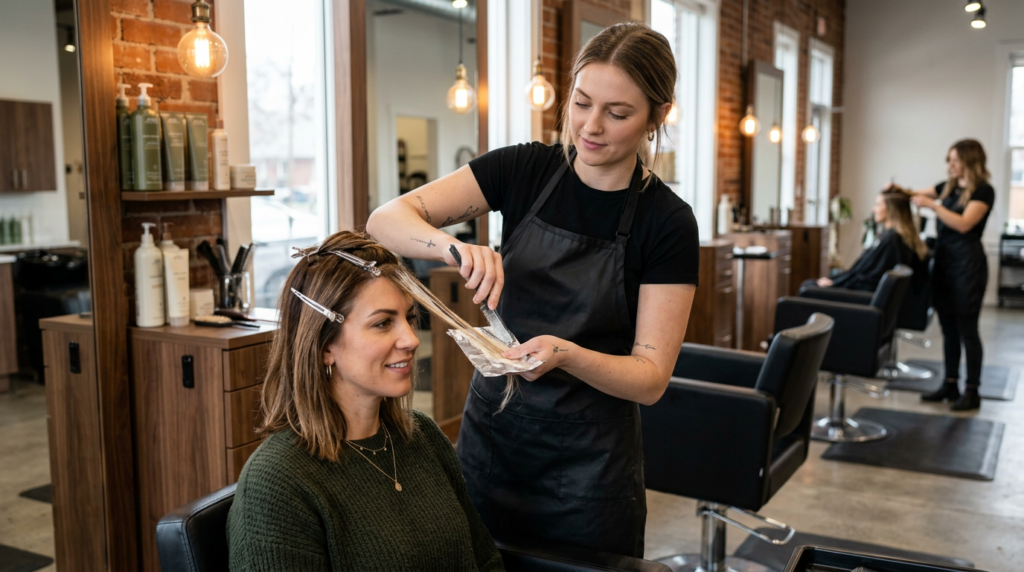
Highlights are selected strands that are lightened to create contrast with the surrounding hair. For foil highlights, a stylist separates sections, applies lightener, and encloses them in foil. Foils keep treated sections apart and offer control over placement. Fine sections can support a delicate blend; thicker sections can create stronger contrast.
The Distinctive Appearance and Advantages of Highlights
Foil highlights can bring brightness closer to the roots than a typical lived-in balayage application. They also allow precise patterns around a part or hairline.
Foils don’t automatically mean stripes. Section size, spacing, and contrast determine how soft or bold the finished color can appear. Ask to see examples that match your natural base, not just your target blonde.
Partial Highlights vs. Full Highlights: What’s the Difference?
Partial highlights treat selected areas, while full highlights place lightened sections throughout the head. A partial application often focuses on the face frame, part, and crown. A full application includes underneath sections too. Neither term specifies the final shade, and neither means every strand will be lightened.
- Partial: Discuss for targeted brightness with darker underlying hair.
- Full: Discuss for brightness visible from more angles.
- Either: Review placement with your hair both down and tied back.
Who Should Consider Highlights?
Highlights are worth considering if you want brightness near your roots or a carefully repeated pattern of lighter strands. Partial coverage can suit someone focused on the front and top. Full coverage is worth discussing if darker underneath sections bother you, especially when wearing ponytails, braids, or other upstyles.
Bring a photo of your everyday hairstyle when discussing highlights. That helps frame the next decision: application method versus coverage.
Balayage vs. Highlights: A Direct Comparison
The key distinction in balayage vs. partial highlights is technique versus coverage. Balayage describes how color is applied. Partial describes how much of the head receives highlights, so these categories can overlap.
Application Technique and Precision
Hand-painting gives the stylist control over where each painted section starts and how brightness progresses. Foils give control over isolated strands and their distribution. Both require careful planning.
Neither technique is automatically gentler. Formula, processing, previous lightening, and overlap onto fragile hair all matter. Tell your stylist about home color, smoothing treatments, and earlier lightening before choosing either method.
Desired Look and Blending Effect
Balayage often aims for darker roots and brighter ends, while foil highlights can distribute brightness closer to the scalp. These are common goals, not fixed rules.
For example, fine foil sections can support a soft blend on straight hair. Wider painted ribbons can help dimension remain visible through curls. Describe the effect you want before committing to the tool.
Maintenance and Grow-Out
A softer root transition can help make new growth less noticeable. Bright foils placed close to a dark natural base can create stronger contrast as hair grows.
Root upkeep and tone upkeep are different jobs. You can still need a tone refresh while liking your root blend. Ask your stylist which future appointments address regrowth and which address warmth.
Versatility and Customization
Combined placement can address goals that one technique alone doesn’t cover. A stylist might discuss foils near the hairline with painted sections through the lengths.
Pro Tip: Bring one photo for brightness and another for the root blend. Explain what you like in each rather than asking to copy everything.
Ask which parts of your reference require lightening, toning, or a change in placement. That conversation should shape your service plan.
Choosing Your Perfect Hair Color Technique at Landis Lifestyle Salon
A reference photo cannot show what your hair has already been through. We recommend starting with treatment history and condition before settling on a color goal.
Consider Your Hair Type and Texture
Texture changes how visible a highlight appears. Fine sections can disappear inside dense curls, while high-contrast ribbons can appear more obvious on straight hair.
Our supplied client feedback includes positive experiences with coloring thick, curly hair. Other feedback emphasizes listening carefully to aesthetic preferences. Those themes reinforce why texture and expectations belong in the consultation, not as afterthoughts.
Fragile ends deserve particular attention. Ask whether a test on a small section is appropriate before further lightening. A staged plan can be preferable to pushing for the lightest possible result immediately.
Reflect on Your Lifestyle and Maintenance Commitment
Your realistic appointment routine should guide placement. If you prefer fewer root-focused visits, discuss retained depth near the scalp. If a bright hairline matters most, plan for its upkeep.
For balayage vs partial highlights, compare the complete plan rather than the first appointment alone. Ask what the quote includes, whether toning is needed, and how future maintenance differs. We don’t recommend choosing by the service label alone.
Landis uses VISH to measure color formulas by weight. This accuracy-focused process supports consistent mixing and helps reduce product waste. Ask about Aveda Pure Privilege participation and applicable benefits without assuming a service discount.
Your Desired Outcome: Subtle or Striking?
Your desired outcome is best expressed through brightness, contrast, and root depth rather than a technique name. Subtle color can still include bright pieces around the face. A striking result can still retain darker roots. Show your stylist where you want attention drawn and where you prefer natural depth.
Explore our Hair Coloring Services and request a personalized consultation. Proudly serving Salt Lake City, UT, from our Marmalade and Sugar House locations.
We also welcome clients from across Salt Lake County, including Murray, Sandy, and West Jordan. Choose the location that fits your routine, then plan the aftercare that supports your color between visits.
Caring for Your Colored Hair: Tips from Landis Lifestyle Salon
Soft regrowth does not make lightened hair maintenance-free. Your care routine should address both tone and the condition of the lengths.
Maintaining Vibrancy with Aveda Hair & Beauty Products
Choose care products around your hair’s current needs, not just its color label. Fine hair and dense curls often call for different conditioning routines.
As an Aveda-exclusive salon and spa, we use and retail Aveda Hair & Beauty Products. Ask us to recommend cleansing and styling options for your texture and treatment history.
Purple-toned care isn’t a universal answer to unwanted warmth. It targets yellow tones, not every orange or uneven area. Ask whether it belongs in your routine and how to use it without overcorrecting.
For ongoing product purchases, ask about Aveda Pure Privilege and which benefits apply. Build the care routine first; evaluate rewards second.
Protecting Your Hair’s Health Post-Color
Repeated lightening and unnecessary heat deserve more attention than the balayage-versus-foil label. Tell your stylist if you notice increased tangling, snapping, or rough ends before your next color service.
- Use heat protection and follow the product directions.
- Avoid repeatedly passing hot tools over the same sections.
- Discuss conditioning needs during Salt Lake City’s dry weather.
- Tell your stylist about regular swimming or heavy outdoor exposure.
Skip home lightening between appointments. A professional can assess previous placement and work to avoid overlap on already-lightened sections. Ask for an aftercare plan before leaving the chair.
To care for highlights in Salt Lake City‘s dry weather, discuss conditioning and heat habits alongside your color plan. Dry-feeling ends don’t automatically need more lightening or toner. Ask us which Aveda Hair & Beauty Products suit your texture, and report changes in breakage or tangling before rebooking color.
The Bottom Line: Making Your Hair Color Choice
The right balayage vs partial highlights decision starts with your hair, not a trend label. We recommend bringing reference photos, your color history, and an honest picture of your upkeep routine.
- Choose the effect first: Root brightness, lighter ends, and overall coverage are separate decisions.
- Compare complete plans: Initial color, tone refreshes, and regrowth maintenance serve different purposes.
- Respect your starting point: Previous treatments and fragile lengths can change what’s appropriate.
Next, turn those priorities into a personalized placement plan. Request a personalized consultation at Landis Lifestyle Salon to discuss brightness, placement, and maintenance before choosing your service. Together, we can plan an approach that supports your goals without overlooking your hair’s condition.
Related Reads from Landis Lifestyle Salon

- Balayage vs. Highlights: Which Hair Color Technique is Right for You? - October 9, 2026
- Seasonal Hair Color Trends for Summer 2026 in Salt Lake City - July 7, 2026
- Salon Apprenticeships SLC: Your Path to a Styling Career - June 30, 2026